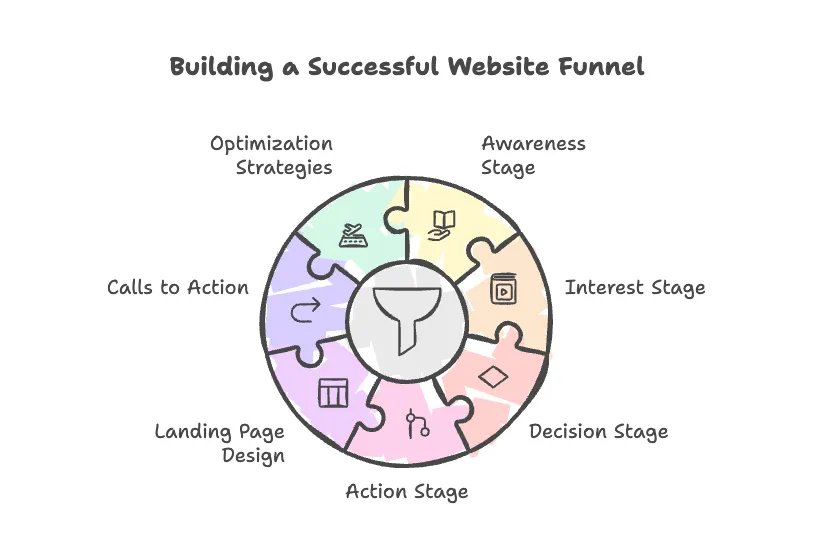
Crafting a Winning Website Funnel
Crafting a Winning Website Funnel
Introduction
Creating a winning website funnel is essential for driving more sales and growing your business. A well-designed funnel guides visitors from the moment they land on your site, all the way to the final purchase. It’s all about leading your prospects through a journey that turns them into customers.
Understanding how each part of a funnel works is the first step. Each stage has a specific role in moving the customer closer to buying. The journey often begins with attracting visitors to your landing page, capturing their interest with valuable content, and encouraging them to take specific actions. This could mean signing up for a newsletter, downloading an eBook, or making a purchase.
A successful funnel requires carefully crafted elements that work together seamlessly. From engaging landing pages to compelling calls to action, every part plays a crucial role. You need to make sure each step is optimised to keep visitors moving through the funnel. Small tweaks can make a big difference in how effective your funnel is.
In this article, we'll explore the key stages of a website funnel, how to design an engaging landing page, ways to create strong calls to action, and tips for optimising each stage for maximum conversions. By the end, you'll have a clear understanding of how to build a funnel that not only attracts visitors but also converts them into loyal customers.
Understanding the Stages of a Website Funnel
A website funnel consists of several stages, each designed to guide the visitor closer to making a purchase. By understanding these stages, you can create content and design elements that keep users moving through the funnel.
Awareness Stage
The awareness stage is the top of the funnel. Visitors are just discovering your brand and what you offer. Your goal here is to attract as many people as possible and pique their interest. Content like blog posts, videos, and social media can draw visitors to your site.
Interest Stage
Once visitors are aware of your brand, they enter the interest stage. Here, you provide more detailed information to keep their attention. This could include informative articles, email newsletters, or webinars. The key is to educate your audience and build trust.
Decision Stage
In the decision stage, visitors are considering whether to buy from you. Offer them detailed product information, customer reviews, and comparisons. This helps them see the value of your product or service and how it meets their needs.
Action Stage
The action stage is where visitors decide to make a purchase. Make this process easy with clear calls to action, simple checkout processes, and strong guarantees or incentives. A seamless user experience is critical to converting visitors into customers.

Designing an Engaging Landing Page
Your landing page is often the first impression visitors get of your business. It's crucial to make it engaging and informative to keep them interested and encourage further action.
Clear and Compelling Headlines
Start with a clear and compelling headline that grabs attention. It should quickly convey the main benefit of your product or service. This sets the stage for what visitors can expect and entices them to read on.
High-Quality Visuals
Use high-quality visuals to support your message. This includes images, videos, and graphics. Visuals can make your page more appealing and help explain complex ideas quickly.
Concise and Persuasive Content
Keep your content concise and persuasive. Visitors should understand your key points at a glance. Highlight benefits over features, and use bullet points to make the text easy to scan.
Strong Calls to Action
Include strong calls to action throughout the page. Phrases like “Get Started Now” or “Claim Your Free Trial” guide visitors on the next steps to take. Make sure your CTAs stand out with contrasting colours and are easy to find.
Trust Signals
Add trust signals such as customer testimonials, reviews, and security badges. These elements build credibility and reassure visitors that they are making a wise decision by engaging with your business.A well-designed landing page combines these elements to create a seamless and persuasive experience that keeps visitors engaged and encourages them to move further down your funnel.
Creating Compelling Calls to Action
Creating compelling calls to action (CTAs) is key to guiding visitors through your website funnel. A strong CTA makes it clear what action you want the user to take next, whether it's signing up for a newsletter, downloading a guide, or making a purchase.
Be Clear and Direct
Your CTA should be clear and direct. Tell visitors exactly what you want them to do. Use action-oriented words like "Buy," "Sign Up," "Get Started," or "Download." Avoid vague phrases like "Click Here," which don’t tell the user what they will get after clicking.
Create a Sense of Urgency
Creating a sense of urgency can motivate visitors to act quickly. Phrases like "Limited Time Offer," "Act Now," or "Only a Few Left" encourage immediate action. This can be especially effective in promoting sales or limited-time events.
Use Contrasting Colours
Make your CTA buttons stand out by using contrasting colours. The button should be easy to spot on the page. A well-placed and brightly coloured CTA button can draw the eye and increase the chances of visitors clicking on it.
Keep it Concise
Your CTA should be concise. A few words are usually enough to convey your message. The simpler and more straightforward your CTA, the more effective it will be. People should understand exactly what action they are taking just by reading it.
Test and Optimise
It's important to test and optimise your CTAs. Try different wording, colours, and positions on the page to see what works best. Monitor performance and make adjustments as needed to ensure your CTAs are driving the actions you want.
Optimising Each Stage for Maximum Conversions
Optimising each stage of your website funnel maximises conversions and ensures visitors continue moving toward the final purchase. Small tweaks and adjustments can result in significant improvements.
Evaluate Performance Regularly
Regularly evaluate the performance of each stage in your funnel. Use analytics tools to track metrics like click-through rates, bounce rates, and conversion rates. This data helps identify areas that need improvement.
Simplify the User Experience
A simplified user experience can greatly improve conversion rates. Reduce the number of steps required to complete an action, streamline forms, and remove unnecessary distractions. Make it as easy as possible for visitors to move through your funnel.
Personalise Content
Personalise content based on user behaviour and preferences. Tailored messages and offers can increase engagement and make visitors feel more connected to your brand. Use data from previous interactions to create a more personalised experience.
A/B Test Changes
A/B testing allows you to compare two versions of a page or element to see which performs better. Test different headlines, images, CTA buttons, and page layouts. Use the results to optimise each stage of your funnel.
Focus on Mobile Optimisation
Ensure your website and funnel are optimised for mobile users. With more people using smartphones to browse and shop, a mobile-friendly design is crucial. Check that all elements load correctly on mobile devices and that navigation is easy.
Conclusion
Crafting a winning website funnel involves understanding the stages, designing engaging landing pages, creating compelling calls to action, and optimising every step for maximum conversions. It’s about leading visitors along a path that turns them into loyal customers and maximising your sales in the process.
At Pancake Pixels, we specialise in helping agencies and businesses grow with our proven all-in-one sales and marketing solutions. Let us help you skyrocket your growth and create a website funnel solution that drives results. Contact Pancake Pixels today and take the first step towards boosting your sales!
