
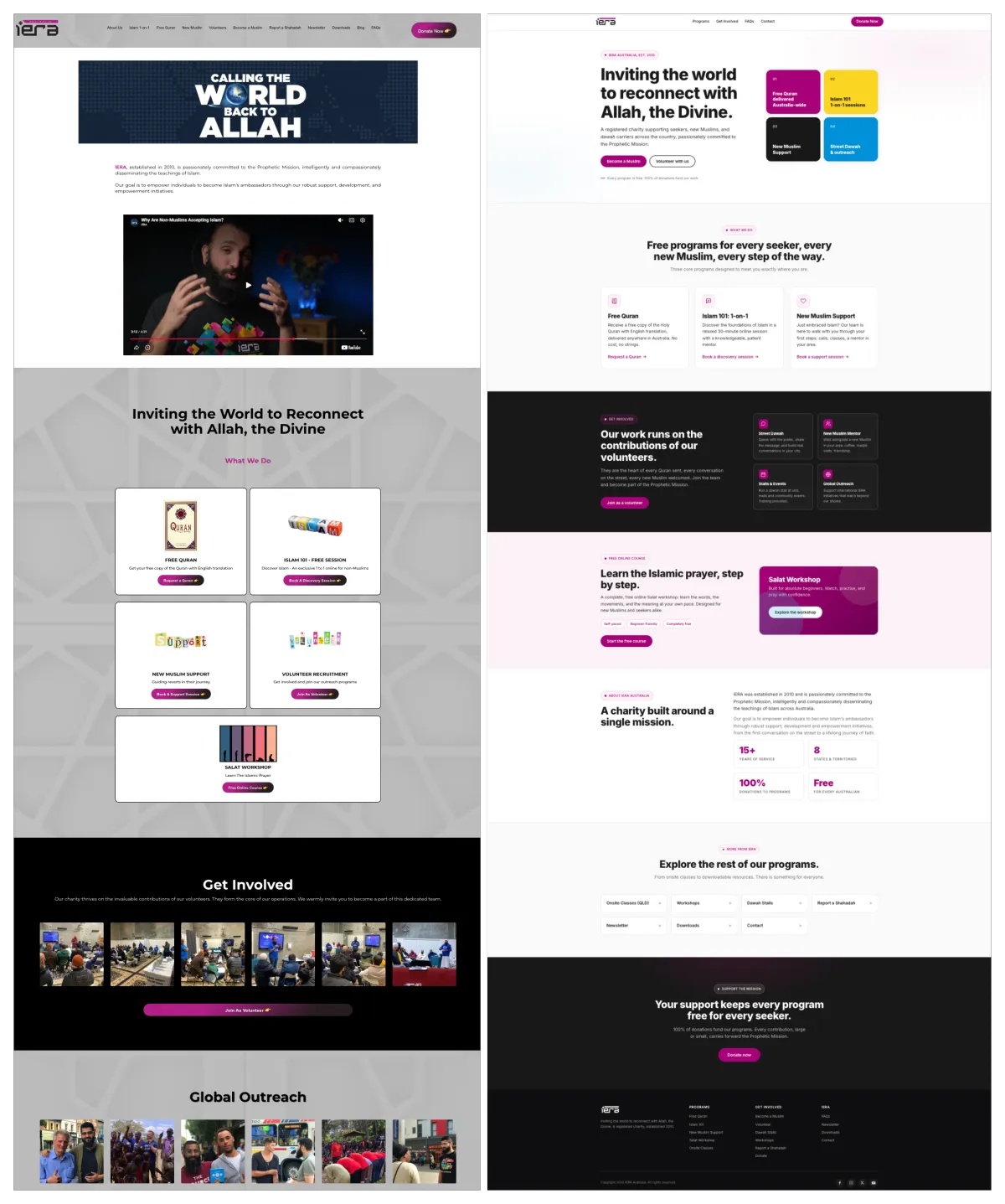
Rebuilding iera.au: 28 Pages, 2 Days, One Design System
When iERA Australia approached us, they had a familiar problem.
Their website had grown organically over years. Page by page, campaign by campaign, volunteer by volunteer. Every individual page had been built with good intentions, but the network as a whole had drifted — inconsistent fonts, mismatched palettes, navigation that disagreed with itself depending on where you landed, and every update meant editing each page separately.
The brief was simple: bring the whole network into a single, cohesive identity. Make it fast. Make it accessible. And make it easy to maintain going forward.
What is genuinely wild is how quickly we got there. Pancake Pixels rebuilt the entire iera.au site — 28+ pages including the homepage, the donation portal, the FAQs, four separate calendar booking flows, the volunteer pipeline, and every supporting form — in the past 2 days.
Not weeks. Not months. Two days.
And no, that is not a gimmick. The whole network is live right now at iera.au — you can scroll it yourself. The footer of every page carries our quiet "Built by Pancake Pixels" credit because we wanted everyone to see that this scale of rebuild is genuinely possible.
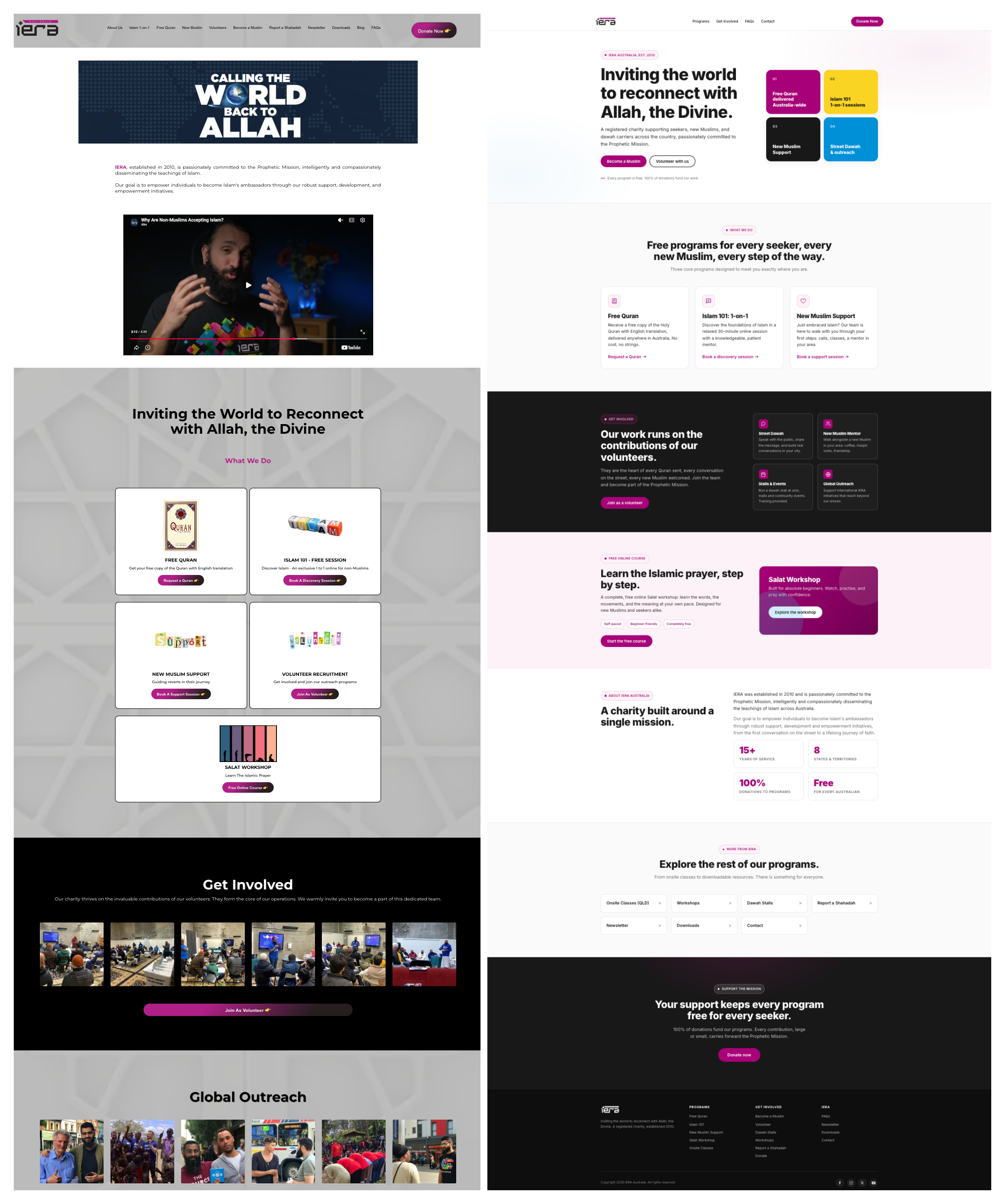
How a 2-day rebuild is even possible
The honest answer is that it would have been impossible without a design-system-first approach. Here is what that means in practice.
One visual identity, derived from one source. We pulled the magenta directly out of the iERA logo. From there, every colour, every button, every shadow, every spacing rule cascades. There is no decision-making at the page level — the page just inherits from the system.
A single source of truth for everything shared. The navigation, footer, social links, fonts, and brand assets all live in one shared file. When iERA later asked us to remove the "About" and "Volunteer Login" links from the menu, it took 30 seconds and one save — and every page in the network picked up the change immediately.
Pure-code embeds, dropped into their existing platform. iERA is on a hosted platform with Custom Code blocks. Instead of migrating them off it (risky, slow, and expensive), we built every page as a self-contained code block that drops in cleanly. No downtime. No data migration. No "the new site is coming soon" landing page for three months. If you are weighing whether to migrate or modernise, our piece on resolving conflicts between different website tools covers this trade-off in depth.
Scoped CSS that cannot leak. Each page’s styles are scoped to a unique ID, so nothing we build can accidentally interfere with the rest of the platform. iERA’s existing forms, calendars, and donation widgets keep working exactly as they did before — we wrap around them, not over them.
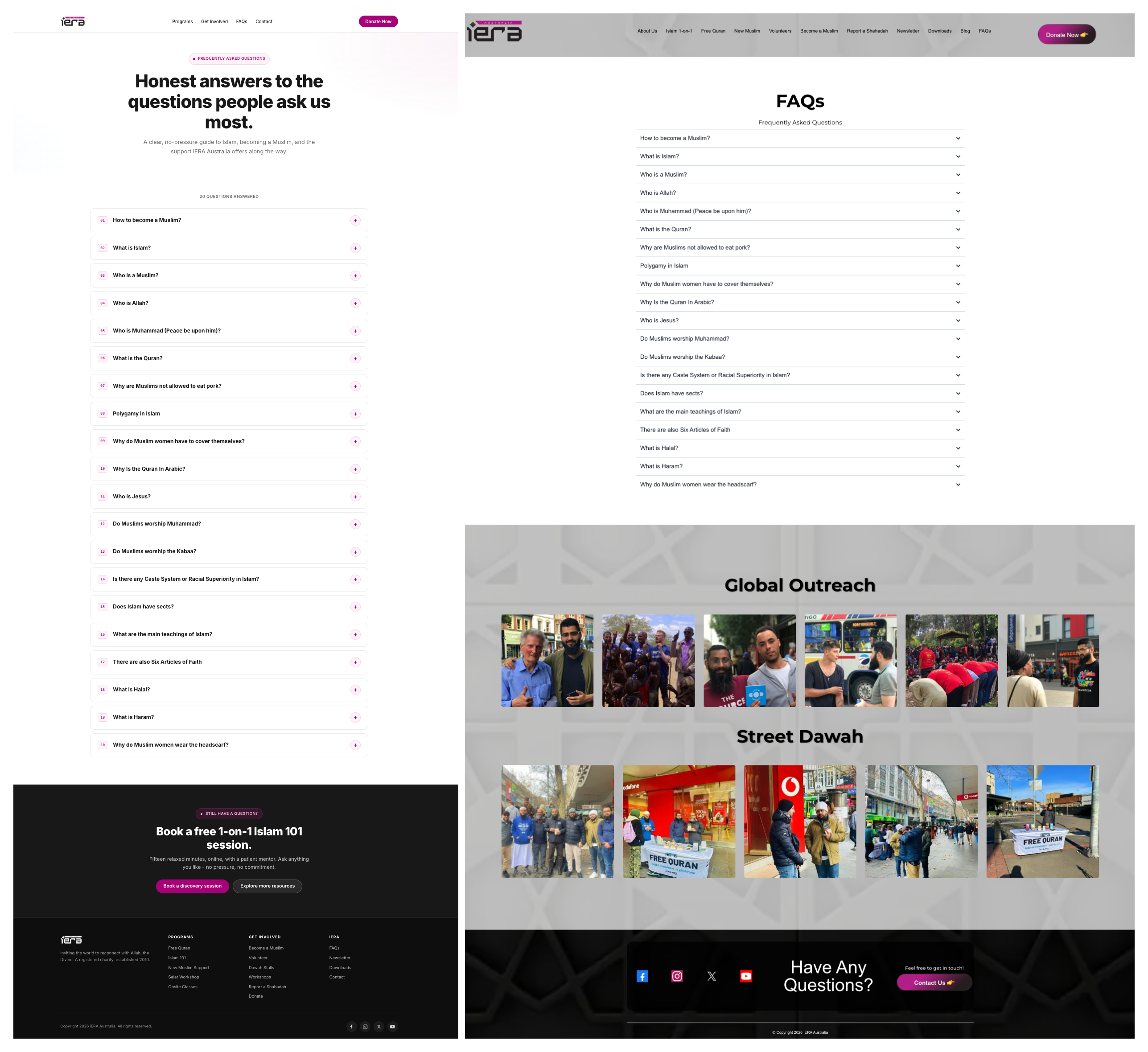
The numbers, since they tell the story
- 28+ pages rebuilt and shipped
- 2 days end-to-end build time
- 0 minutes of downtime
- 1 shared file controls the global identity
- 100% mobile-responsive from day one — we have written before about fixing mobile responsiveness on a business website, and the same principles drove every layout decision here
When iERA later asked us to update an email address, a phone number, or a CTA destination, we did it once — in the shared file. Every page updated. That is the part that makes us excited to keep working with them.
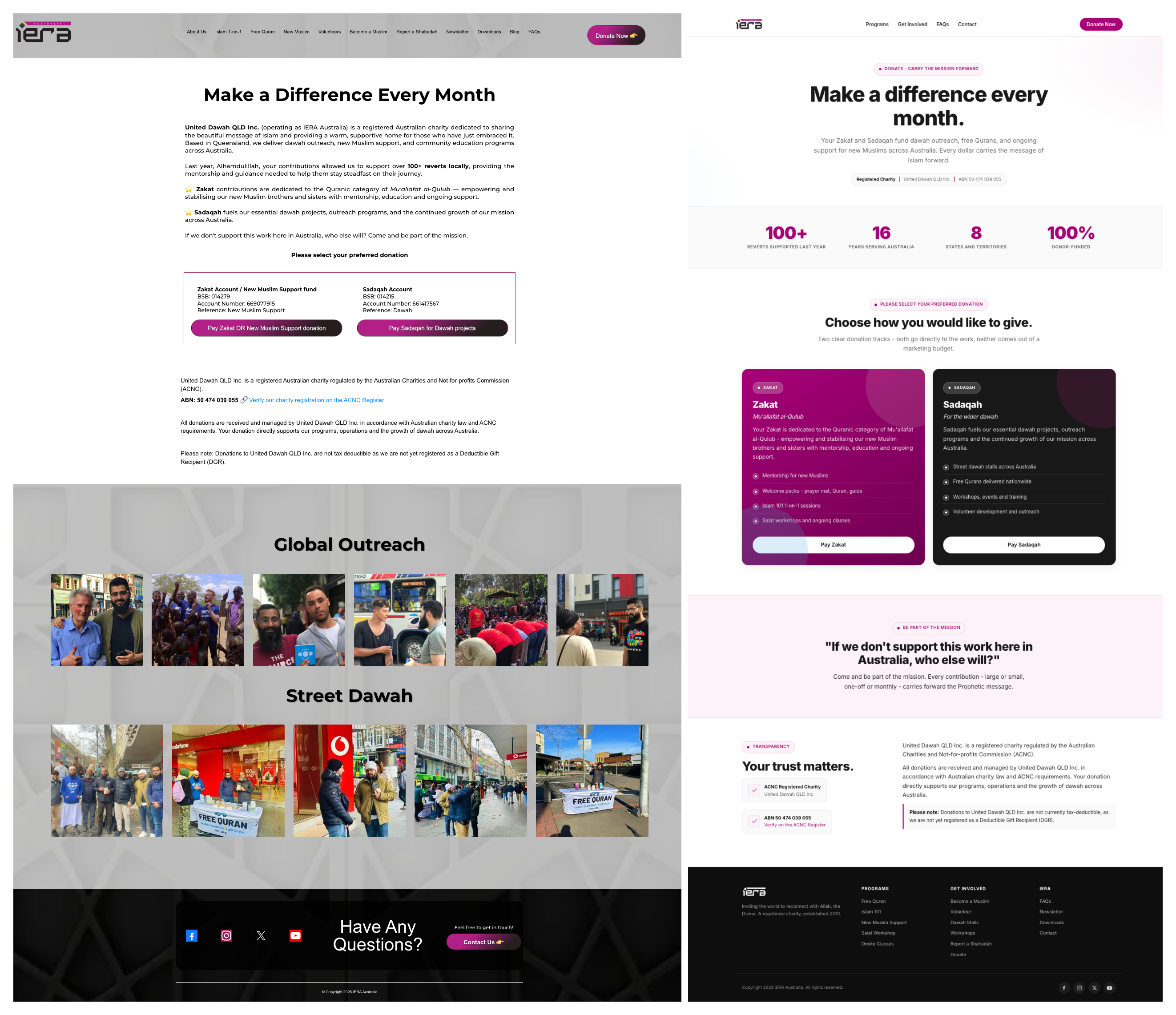
What this means for iERA going forward
A network like this is no longer a website project that has to be redone every three years. It is a living system. iERA can add a new programme page, a new campaign landing page, or a new calendar booking flow in a single afternoon. The design just happens. They never have to brief us on what colour the buttons should be, because the buttons already know.
That changes the conversation from "we need to do another rebuild" to "we want to ship a new programme — can we have a page ready by Monday?" The answer is yes, every time. (The same logic is what we covered in what makes a website funnel work for busy freelancers — speed of iteration matters more than perfection of the first launch.)
The wider pattern
iERA Australia is not an unusual case. Most organisations we meet — especially charities, training providers, religious organisations, and mission-driven small businesses — have websites that grew the same way. One developer years ago, then a contractor who left, then a well-meaning volunteer who built a page in a hurry. The pattern is universal. We wrote about it from a different angle in why hiring a marketing agency is the wrong move for most Australian small businesses — the issue is rarely creativity, it is operational drift.
If that describes you, we would genuinely love to help. The 2-day timeline depends on the scope, the platform, and the brief — some rebuilds take a week, some take three days. But the approach is always the same: design system first, then everything else gets quicker.
What Pancake Pixels does
Pancake Pixels builds:
- Design system rebuilds like the one above
- High-converting landing pages and funnels for products and programmes
- Customer follow-up automation — the SMS, email, and AI voice flows that turn a form fill into a paying customer
- CRM and operations builds that connect your front-end pages to the back-end data you actually need
We work end-to-end so you do not have to coordinate three agencies who never talk to each other.
If your organisation’s website is overdue for the same treatment, DM us on LinkedIn or have a look at pancakepixels.io.
Continue reading
- 5 Brand and Marketing Mistakes Every Australian Small Business Makes
- How Website Development in Melbourne Can Make Sales Easier
- What a Business Growth Platform Actually Does Day to Day
Want to be the next case study? We are accepting a handful of new clients in Q3.
